

Remarks by Michael H. Moskow
President and Chief Executive Officer
Federal Reserve Bank of Chicago
Chicago Metropolitan Agency for Planning
Innovation + Integration: A Summit on the Economic Impact
of Linking Jobs, Housing and Transportation Planning
University of Illinois at Chicago
Student Center East, Illinois Room
750 S. Halsted St., Chicago, IL
February 6, 2007
Integrated Planning for a Global City*
Globalization has brought new opportunities to large cities such as Chicago. Large cities are best suited to perform the advanced business services that global transactions require, such as finance, law, and logistics. However, because our large cities are so complex and diverse, and because their residents live and work so closely together, large cities face intense and competing demands on land use and public services.
If Chicago is to continue to stand out as one of the nation's leading cities and continue to expand its global role, it must function efficiently in its internal circulation of ideas, goods, and—the hallmark of great cities—people. In this regard, I would like to put into context how very useful the new CMAP organization can be to the future of Chicago.
We can begin to understand our current challenges and opportunities by examining our own past development. The emergence of Chicago is a story that combines our city's entrepreneurial spirit with the blessing of geography. Looking back to 1840, Chicago was a humble burg of 4500 people. It was the 92nd largest city in the U.S.; Detroit was twice as big, St. Louis was four times larger, Cincinnati was ten times bigger, and New Orleans had 100,000 more people. But the region surrounding Chicago was poised for growth. The Midwest contained a seemingly boundless and largely untapped wealth of natural resources. It had furs and game, minerals, timber, coal, and the world's richest soils for agricultural and livestock production.
Chicago had a great natural location advantage to bring these goods to market. It lay at the intersection of the two great waterways of the interior, the Mississippi Basin and the Great Lakes. Several bold infrastructure initiatives shaped Chicago into the primary vehicle for using the waterways to gather and distribute these commodities. Local projects included opening the harbor mouth of the Chicago River and building the Illinois and Michigan Canal, which linked Chicago to the Mississippi Valley, St. Louis, New Orleans, and the Gulf of Mexico. The construction of the Erie Canal linked Chicago to New York City and the East via the Great Lakes.
Later, as rail supplanted water as the primary transportation method, Chicago-area entrepreneurs funneled the nation's railroad system through the city. This solidified Chicago's position as the primary nexus of midcontinental commodity grading, processing, and transshipment.
As the center point of commodity transshipment, Chicago had obvious and abundant opportunities to "make the markets" in these same commodities and to serve as the headquarters for the emergent companies who were trading, financing, and distributing these goods. Chicago's businessmen capitalized on these opportunities by adapting such innovations as grain elevators and refrigerated freight cars to transport dressed beef to eastern markets. Notably, the city's leaders also advanced public and quasi-public institutions, including membership commodity exchanges, wholesale goods exchanges, trade shows, a world's fair, and permanent merchandise showcase facilities.
Not only could the city move materials in and ship products out, it also could move its residents to work sites. These abilities combined to make Chicago a great manufacturing powerhouse. Chicago's early-20th-century legacy of industries—including steel, meatpacking, clothing, food processing, and machinery—all derived from the city's transportation advantages and location. Both the material- and people-moving requirements of these industries were enormous. Manufacturing operations then were not the sparsely manned operations that we know today. Large numbers of workers were necessary to move and transform material. By 1890, Chicago had welcomed more than a million people into its borders, making it the second-largest city in the country. While the city was relatively efficient at moving all of these people to their jobs and moving all of the goods they produced, the tasks were never easy, and they often resulted in severe strains on the transportation infrastructure and rights of way.
In other words, from an urban-planning and growth-management perspective, many of the planning and public-service challenges and conflicts of today were already evident early on. The city's transportation network ran through land that was scarce, often swampy, and sometimes disease plagued. And the network was perpetually congested funneling commodities through the city in all directions.
At the same time, Chicago's commercial district soon housed one of the world's primary office centers, where office workers shared and transmitted business information face-to-face and met together in newly invented skyscraper buildings to discuss and sometimes agree on business and financial deals. And so, office workers commuted over or across the same roads and rights-of-way as freight. Here, innovations such as the elevated rail transit system as well as much planning and public discussion were needed to bring workers from their residences to downtown.
In looking back on this era, we tend to celebrate Chicago's planning achievements. But at the same time, it is also widely recognized that Chicago was a place ill-prepared to house and serve its in-migration of workers, many of whom were undereducated and, somewhat akin to today, spoke different languages. So too, freight transportation bottlenecks and inefficiencies, and ultimately lost opportunities, were no less prominent. Rapid economic growth in the Midwest and nation at large helped Chicago cover up mistakes and lost opportunities, but the slowing of growth brings them to the fore.
In looking at today's Chicagoland economy, it seems clear that we are in no position to let opportunities slip by for want of foresight and regionwide initiative. The strong growth environment of the 19th and early-20th century is no longer in force to paper over public-policy mistakes. And in an information-based economy where natural and manmade borders are seemingly insignificant, Chicago can't rely on its location to help attract businesses. As a result, the nature of our planning must be more creative and less reactive than in the past.
Over the past 40 years or more, Chicago's performance has been lagging in relation to surging cities in the South and West, especially metropolitan areas of the Sunbelt and Pacific Northwest. Chicago has surrendered its second-city status to Los Angeles. And while Chicago-area personal incomes have been rising along with the national standard of living, Chicago's relative standard of living has been slipping in comparison to the national average. In 1970, per capita income in Chicago was 20 percent higher than the national average; now it's only 11 percent higher.
Chicago's past public policies are not the primary driver for its failure to keep up with these regions, though I think that we could all find some fault in some instances. In particular, as the Chicago Fed concluded in 1997 in our assessment of the Midwest economy, there is no greater determinant of regional growth and prosperity than the education and skills of its people and workforce. Yet today in Chicago and around the Midwest, policy makers still struggle to improve educational outcomes for many inner-city children who are ill-equipped to move into the workforce or on to higher education.
But the lagging economic performance of the Chicago metropolitan area also largely reflects structural shifts in the nation's economy and in its broad economic geography. The Midwest's natural resources as we knew them were superseded or depleted. In addition, while technological changes fostered rapid growth in the region's capacity to produce both manufactured goods and agricultural crops, technological progress has also meant significant labor savings and relatively less growth in demand for midwestern and Chicago production workers. To be sure, falling prices for midwestern goods have helped lift standards of living for American households. But at the same time, there has been so far insufficient offsetting growth in the demand for midwestern products. As a result, the region has not kept pace with the rest of the country.
In sum, the Chicago region generally finds itself as the business capital city of a slowly growing region rather than a rapidly growing one. The city continues to function well as the distributor, financier, and business-service provider of the surrounding Midwest, but this has not been sufficient to sustain economic growth at national standards.
This is not to say the Chicago region is without promising prospects. The region has expanded many of its business lines and become a national and global market maker in several important arenas. Chicago remains a headquarters city for national and global companies, second only to New York. Chicago's tourism trade is on the rise, while the city continues to stand out as a host to business meetings and conventions. Chicago's financial-service industries, especially the risk-market exchanges and clearinghouses, have recently revived and continue to flourish, serving as a key platform for global trading. The city's business-service industries and segments of the legal sector are also prominent. Its premier universities serve a global clientele, as do many of its health professionals, clinics, and hospitals. Perhaps most importantly, Chicago has crafted a diverse and high-quality environment that has the potential to attract many of the world's most creative and entrepreneurial people.
And so today, although Chicago has experienced upheaval due to technological change and globalization, it also has significant new opportunities. Depending on its own actions, Chicago can either maintain its limited status and growth as the business capital of the Midwest, or it can adapt to the changing economy and further its global importance. In this, Chicago could become the portal that helps revive the surrounding Midwest.
In order to help Chicago reach its full potential as a global and national city, I think it's most important to recognize that Chicago's physical needs have changed. How we live and work requires an ever-increasing amount of physical circulation of workers—especially professional and knowledge workers. Skilled workers often find it more productive to continue to commute from home to office to exchange information, despite having the technical ability to work at home with the Internet and personal computers. Such information is often ambiguous, in the sense that it must be interpreted and often creatively advanced through business meetings face-to-face, often in a group setting, and often with rapidly changing groups of people located far and wide. As urban economist Ed Glaeser stated during his recent visit to Chicago, technical advances have only magnified the value of face-to-face communication. In today's information economy and in its advanced information industries, "who we converse with on the Internet are also those who we find we must meet with face-to-face." Accordingly, overland commuting and transport are more important then ever.
As I'm sure you'll recognize, in many sectors such as high technology, the arts, and finance, these meetings may be casual rather than prearranged. This means that the global city that hosts conventions, conferences, and the trendy arts, café or nightlife scene is even more amenable to value-creating ideas.
In this information-rich business environment, as Chicago strives to become a city that functions above or in a league with other global cities, the implications for commodious ground transport and residential access for such opportunities are compelling. Within the metropolitan area, the structure and direction of such workplace trips has changed mightily. Chicago's employment centers have expanded well beyond the Loop and are now widespread. Our transportation system was designed well to move workers from the suburbs to the Loop, but it has been strained as more people find themselves commuting from Naperville to Schaumburg, or leaving their office in Palatine for a meeting in Lake Forest. For the city to work well, it requires key infrastructure such as highways and land-use planning that promotes circulation of people in getting around. Both ground and intercity transportation must be accommodated and eased to facilitate travel for workplace, residential, and recreational wants and needs.
In this, it almost goes without saying that some regionwide planning of infrastructure and land use will be needed for Chicago to reach its potential. To take the case of ground transportation, the metropolitan area's transportation grid functions as a network of interconnected pipes rather than as a set of autonomous parts. A traffic accident or delay on any major artery affects the entire system. While the region's transportation agencies correctly tend to view the Chicago-area transportation grid as an integrated network, local governments sometimes have perspectives that run counter to the needs of the regional transportation grid. A local community may be more interested in providing its residents with easy access to the regional transportation grid than easing egress across its own community. Many of us like to live on suburban cul-de-sacs, for example. But as we all locate our homes on them, we become flustered as we exit our neighborhoods into gridlock traffic congestion.
So too, overly local land-use decisions for housing can unduly raise living costs. In particular, in their planning and zoning decisions, individual communities sometimes promote the size and type of housing that appears, on the face of it, to maximize local property values. Yet in many instances, local property values and economic growth in the aggregate region can often be enhanced by more-concerted and comprehensive regionwide consideration of access to transportation and jobs. Failure to plan transportation and land use regionwide can impede a critical asset of large cities, the close matching of specialized and skilled workers with the unique labor demands of diverse big-city employers.
But ready access and ample circulation is no less important for the city's less-skilled workforce. For example, high-income communities in the Chicago area sometimes use local land-use authority to exclude or impede higher density, more-affordable housing, often leading to broad sections of the metropolitan area that become overly segmented by income. In turn, this segmentation burdens the lower-income workers who have to make longer commutes, hurts everyone else due to the increased congestion, and increases the difficulty businesses face in attracting and retaining workers. The overall result is relatively slower growth in the regional economy.
Traffic congestion rises along with longer commuting distances, thereby lowering the city's productivity. And as we all know, our auto and bus commuting times have increased significantly in recent years—I know my commute takes 10 to 15 minutes longer than it did when I started at the Chicago Fed in the mid-1990s. By one recent study, the average Chicago commuter spends 58 hours per year stuck in rush-hour delays, up from 42 hours in 1990. As a result of such disconnects between overly local decision making and the broader regional interests, the successful tables in large metropolitan areas are being set through broad discussions of how local land use affects the whole.
But for today's city that aspires to be globally successful, the benefits of maximum circulation of people go beyond timely and low-cost access from home to job. Physical access and contact play a large part in bringing about cultural acceptance and hopefully a productive blending of people and ideas in the commercial arena. In science and in commerce, so often the productive breakthrough and value generation comes about from the synthesis of diverse ideas and fields. Accordingly, large diverse cities such as Chicago are potentially advantaged in generating value-added in commerce. But potential will only give way to success if the region can productively bring about the abundant circulation and contact among its diverse peoples and ideas so that the scope of Chicago's innovation network can grow apace. The new ideas that propel today's economy are often borne of diverse viewpoints and cultures.
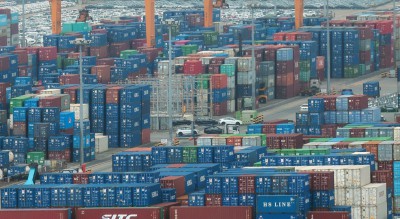
While the Chicago economy has been transforming into a more information-based service economy, its planning challenges are sharpened by its having one large foot in its previous form—manufacturing and freight transportation. Both distribution and wholesaling activities remain outsized in the Chicago area. Recently, with heightened global trade from the Pacific Rim to the U.S., Chicago-area freight transportation has grown rapidly and is projected to continue to do so. And so, new opportunities will emerge as the Panama Canal has reached its maximum capacity, potentially channeling more freight overland across the U.S. and through and around the Chicago area.
Chicago's vast capabilities in this arena generate significant local income in its own right. A recent Metropolis 2020 study reports 37,000 jobs in Chicago's railroad freight industry alone. But in addition, Chicago's highly developed distribution system creates many more opportunities for additional manufacturing and distribution activity in both Chicago and the surrounding Midwest. As Chicago's historical development shows, access to freight often goes hand-in-hand with the ability to assemble and further process the content of that freight.
However, as Chicago's economy shifts toward high-valued service production and away from freight-laden manufacturing, the value of Chicago's existing roadways to bring workers to and from their offices is rising in relation to their value for moving goods around and through Chicago. With only limited land and infrastructure, can the region realize the full scope of its opportunities?
Even with some concerted and likely expensive actions to expand and reconfigure infrastructure, there does not appear to be room for all roadway and rail traffic. Building roadway capacity to serve all possible traffic is not an option. To do so would be too expensive in both construction costs and in taking up limited urban land. Yet given its lagging growth opportunities, the region will want to act to maximize its ability to handle as much freight and human traffic as possible. And so, in addition to some expansion of transportation capacity, the region will need to make difficult and judicious decisions on the most critical infrastructure to repair and build. So too, the region will need to engage in more efficient planning on the location of housing and commercial activity in order to economize on overall travel demand.
To be sure, more rational operational and pricing policies, which allocate existing transportation infrastructure, will also need to be adopted. Creative pricing policies that charge freight users for roads and rail can help to more effectively use our limited roadway capacity and allocate it toward its highest-value use. For example, the Illinois State Toll Highway Authority now charges higher road-use fees for trucks during peak traffic times in and around Chicago. At the same time, electronic payment of tolls helps to speed both cars and trucks through highway toll stations, and the CTA/Pace system has also successfully adopted electronic fare cards. Now, if only we could move further along to seamlessly include the Metra rail system in the electronic payments system! And as we do look ahead, to new and expanded payment technologies, we should also be expansive and strategic in our thinking. Because our travel and general purchases are also varied and geographically broad in scope, we do not want to end up with too many plastic cards and transponders in our overcoats and wallets.
In looking for further efficiency improvements in our payments systems, policy makers in the Chicago region should examine a host of models and experiments from around the world that are now pricing highway driving privileges for trucks and cars, often in combination with privatized ownership or operation of transportation infrastructure. The recently proposed federal budget includes grant funding for local experimentation on congestion pricing. Working with Metropolis 2020, the Chicago Fed will be examining ways to use pricing policies through various personal transit technologies at a conference to be held June 12 here in Chicago.
The Chicago metropolitan area is in the process of transforming itself from an industrial metropolis and a regional business service center into a global business capital. In this, Chicago cannot afford to lose its legacy of industry and freight, nor can it afford to take its eyes off its narrow path as an emergent city on the global network of information-intensive service industries. Chicago's performance in supporting these industries will depend not only on the quality and extent of its global connections, but also on its "local" or "inside" performance. That is, how well can the region provide its workers and businesses with opportunities for work, learning, and recreation?
In raising Chicago's performance to global standards, we come together here today in one of the many conversations that we will be having as a region going forward. With the initial impetus of the Metropolis Project and the recent foresight of the Illinois legislature, CMAP has been created to convene such conversations, collaborative efforts, and the way forward for the Chicago region. CMAP's specific charges are to integrate land use and transportation planning, identify and promote regional priorities, prepare a financial plan for transportation investments, and provide a policy framework for the billions of dollars spent each year on infrastructure and planning in the Chicago region. These are tall orders: to strike the right balance between the valued local autonomy—which helps to makes each of us an active and motivated citizen in our community—with the larger regionwide and global perspectives that make our local decisions truly useful and productive.
*The views presented here are my own, and not necessarily those of the Federal Open Market Committee or the Federal Reserve System.
President and Chief Executive Officer
Federal Reserve Bank of Chicago
Chicago Metropolitan Agency for Planning
Innovation + Integration: A Summit on the Economic Impact
of Linking Jobs, Housing and Transportation Planning
University of Illinois at Chicago
Student Center East, Illinois Room
750 S. Halsted St., Chicago, IL
February 6, 2007
Integrated Planning for a Global City*
Globalization has brought new opportunities to large cities such as Chicago. Large cities are best suited to perform the advanced business services that global transactions require, such as finance, law, and logistics. However, because our large cities are so complex and diverse, and because their residents live and work so closely together, large cities face intense and competing demands on land use and public services.
If Chicago is to continue to stand out as one of the nation's leading cities and continue to expand its global role, it must function efficiently in its internal circulation of ideas, goods, and—the hallmark of great cities—people. In this regard, I would like to put into context how very useful the new CMAP organization can be to the future of Chicago.
We can begin to understand our current challenges and opportunities by examining our own past development. The emergence of Chicago is a story that combines our city's entrepreneurial spirit with the blessing of geography. Looking back to 1840, Chicago was a humble burg of 4500 people. It was the 92nd largest city in the U.S.; Detroit was twice as big, St. Louis was four times larger, Cincinnati was ten times bigger, and New Orleans had 100,000 more people. But the region surrounding Chicago was poised for growth. The Midwest contained a seemingly boundless and largely untapped wealth of natural resources. It had furs and game, minerals, timber, coal, and the world's richest soils for agricultural and livestock production.
Chicago had a great natural location advantage to bring these goods to market. It lay at the intersection of the two great waterways of the interior, the Mississippi Basin and the Great Lakes. Several bold infrastructure initiatives shaped Chicago into the primary vehicle for using the waterways to gather and distribute these commodities. Local projects included opening the harbor mouth of the Chicago River and building the Illinois and Michigan Canal, which linked Chicago to the Mississippi Valley, St. Louis, New Orleans, and the Gulf of Mexico. The construction of the Erie Canal linked Chicago to New York City and the East via the Great Lakes.
Later, as rail supplanted water as the primary transportation method, Chicago-area entrepreneurs funneled the nation's railroad system through the city. This solidified Chicago's position as the primary nexus of midcontinental commodity grading, processing, and transshipment.
As the center point of commodity transshipment, Chicago had obvious and abundant opportunities to "make the markets" in these same commodities and to serve as the headquarters for the emergent companies who were trading, financing, and distributing these goods. Chicago's businessmen capitalized on these opportunities by adapting such innovations as grain elevators and refrigerated freight cars to transport dressed beef to eastern markets. Notably, the city's leaders also advanced public and quasi-public institutions, including membership commodity exchanges, wholesale goods exchanges, trade shows, a world's fair, and permanent merchandise showcase facilities.
Not only could the city move materials in and ship products out, it also could move its residents to work sites. These abilities combined to make Chicago a great manufacturing powerhouse. Chicago's early-20th-century legacy of industries—including steel, meatpacking, clothing, food processing, and machinery—all derived from the city's transportation advantages and location. Both the material- and people-moving requirements of these industries were enormous. Manufacturing operations then were not the sparsely manned operations that we know today. Large numbers of workers were necessary to move and transform material. By 1890, Chicago had welcomed more than a million people into its borders, making it the second-largest city in the country. While the city was relatively efficient at moving all of these people to their jobs and moving all of the goods they produced, the tasks were never easy, and they often resulted in severe strains on the transportation infrastructure and rights of way.
In other words, from an urban-planning and growth-management perspective, many of the planning and public-service challenges and conflicts of today were already evident early on. The city's transportation network ran through land that was scarce, often swampy, and sometimes disease plagued. And the network was perpetually congested funneling commodities through the city in all directions.
At the same time, Chicago's commercial district soon housed one of the world's primary office centers, where office workers shared and transmitted business information face-to-face and met together in newly invented skyscraper buildings to discuss and sometimes agree on business and financial deals. And so, office workers commuted over or across the same roads and rights-of-way as freight. Here, innovations such as the elevated rail transit system as well as much planning and public discussion were needed to bring workers from their residences to downtown.
In looking back on this era, we tend to celebrate Chicago's planning achievements. But at the same time, it is also widely recognized that Chicago was a place ill-prepared to house and serve its in-migration of workers, many of whom were undereducated and, somewhat akin to today, spoke different languages. So too, freight transportation bottlenecks and inefficiencies, and ultimately lost opportunities, were no less prominent. Rapid economic growth in the Midwest and nation at large helped Chicago cover up mistakes and lost opportunities, but the slowing of growth brings them to the fore.
In looking at today's Chicagoland economy, it seems clear that we are in no position to let opportunities slip by for want of foresight and regionwide initiative. The strong growth environment of the 19th and early-20th century is no longer in force to paper over public-policy mistakes. And in an information-based economy where natural and manmade borders are seemingly insignificant, Chicago can't rely on its location to help attract businesses. As a result, the nature of our planning must be more creative and less reactive than in the past.
Over the past 40 years or more, Chicago's performance has been lagging in relation to surging cities in the South and West, especially metropolitan areas of the Sunbelt and Pacific Northwest. Chicago has surrendered its second-city status to Los Angeles. And while Chicago-area personal incomes have been rising along with the national standard of living, Chicago's relative standard of living has been slipping in comparison to the national average. In 1970, per capita income in Chicago was 20 percent higher than the national average; now it's only 11 percent higher.
Chicago's past public policies are not the primary driver for its failure to keep up with these regions, though I think that we could all find some fault in some instances. In particular, as the Chicago Fed concluded in 1997 in our assessment of the Midwest economy, there is no greater determinant of regional growth and prosperity than the education and skills of its people and workforce. Yet today in Chicago and around the Midwest, policy makers still struggle to improve educational outcomes for many inner-city children who are ill-equipped to move into the workforce or on to higher education.
But the lagging economic performance of the Chicago metropolitan area also largely reflects structural shifts in the nation's economy and in its broad economic geography. The Midwest's natural resources as we knew them were superseded or depleted. In addition, while technological changes fostered rapid growth in the region's capacity to produce both manufactured goods and agricultural crops, technological progress has also meant significant labor savings and relatively less growth in demand for midwestern and Chicago production workers. To be sure, falling prices for midwestern goods have helped lift standards of living for American households. But at the same time, there has been so far insufficient offsetting growth in the demand for midwestern products. As a result, the region has not kept pace with the rest of the country.
In sum, the Chicago region generally finds itself as the business capital city of a slowly growing region rather than a rapidly growing one. The city continues to function well as the distributor, financier, and business-service provider of the surrounding Midwest, but this has not been sufficient to sustain economic growth at national standards.
This is not to say the Chicago region is without promising prospects. The region has expanded many of its business lines and become a national and global market maker in several important arenas. Chicago remains a headquarters city for national and global companies, second only to New York. Chicago's tourism trade is on the rise, while the city continues to stand out as a host to business meetings and conventions. Chicago's financial-service industries, especially the risk-market exchanges and clearinghouses, have recently revived and continue to flourish, serving as a key platform for global trading. The city's business-service industries and segments of the legal sector are also prominent. Its premier universities serve a global clientele, as do many of its health professionals, clinics, and hospitals. Perhaps most importantly, Chicago has crafted a diverse and high-quality environment that has the potential to attract many of the world's most creative and entrepreneurial people.
And so today, although Chicago has experienced upheaval due to technological change and globalization, it also has significant new opportunities. Depending on its own actions, Chicago can either maintain its limited status and growth as the business capital of the Midwest, or it can adapt to the changing economy and further its global importance. In this, Chicago could become the portal that helps revive the surrounding Midwest.
In order to help Chicago reach its full potential as a global and national city, I think it's most important to recognize that Chicago's physical needs have changed. How we live and work requires an ever-increasing amount of physical circulation of workers—especially professional and knowledge workers. Skilled workers often find it more productive to continue to commute from home to office to exchange information, despite having the technical ability to work at home with the Internet and personal computers. Such information is often ambiguous, in the sense that it must be interpreted and often creatively advanced through business meetings face-to-face, often in a group setting, and often with rapidly changing groups of people located far and wide. As urban economist Ed Glaeser stated during his recent visit to Chicago, technical advances have only magnified the value of face-to-face communication. In today's information economy and in its advanced information industries, "who we converse with on the Internet are also those who we find we must meet with face-to-face." Accordingly, overland commuting and transport are more important then ever.
As I'm sure you'll recognize, in many sectors such as high technology, the arts, and finance, these meetings may be casual rather than prearranged. This means that the global city that hosts conventions, conferences, and the trendy arts, café or nightlife scene is even more amenable to value-creating ideas.
In this information-rich business environment, as Chicago strives to become a city that functions above or in a league with other global cities, the implications for commodious ground transport and residential access for such opportunities are compelling. Within the metropolitan area, the structure and direction of such workplace trips has changed mightily. Chicago's employment centers have expanded well beyond the Loop and are now widespread. Our transportation system was designed well to move workers from the suburbs to the Loop, but it has been strained as more people find themselves commuting from Naperville to Schaumburg, or leaving their office in Palatine for a meeting in Lake Forest. For the city to work well, it requires key infrastructure such as highways and land-use planning that promotes circulation of people in getting around. Both ground and intercity transportation must be accommodated and eased to facilitate travel for workplace, residential, and recreational wants and needs.
In this, it almost goes without saying that some regionwide planning of infrastructure and land use will be needed for Chicago to reach its potential. To take the case of ground transportation, the metropolitan area's transportation grid functions as a network of interconnected pipes rather than as a set of autonomous parts. A traffic accident or delay on any major artery affects the entire system. While the region's transportation agencies correctly tend to view the Chicago-area transportation grid as an integrated network, local governments sometimes have perspectives that run counter to the needs of the regional transportation grid. A local community may be more interested in providing its residents with easy access to the regional transportation grid than easing egress across its own community. Many of us like to live on suburban cul-de-sacs, for example. But as we all locate our homes on them, we become flustered as we exit our neighborhoods into gridlock traffic congestion.
So too, overly local land-use decisions for housing can unduly raise living costs. In particular, in their planning and zoning decisions, individual communities sometimes promote the size and type of housing that appears, on the face of it, to maximize local property values. Yet in many instances, local property values and economic growth in the aggregate region can often be enhanced by more-concerted and comprehensive regionwide consideration of access to transportation and jobs. Failure to plan transportation and land use regionwide can impede a critical asset of large cities, the close matching of specialized and skilled workers with the unique labor demands of diverse big-city employers.
But ready access and ample circulation is no less important for the city's less-skilled workforce. For example, high-income communities in the Chicago area sometimes use local land-use authority to exclude or impede higher density, more-affordable housing, often leading to broad sections of the metropolitan area that become overly segmented by income. In turn, this segmentation burdens the lower-income workers who have to make longer commutes, hurts everyone else due to the increased congestion, and increases the difficulty businesses face in attracting and retaining workers. The overall result is relatively slower growth in the regional economy.
Traffic congestion rises along with longer commuting distances, thereby lowering the city's productivity. And as we all know, our auto and bus commuting times have increased significantly in recent years—I know my commute takes 10 to 15 minutes longer than it did when I started at the Chicago Fed in the mid-1990s. By one recent study, the average Chicago commuter spends 58 hours per year stuck in rush-hour delays, up from 42 hours in 1990. As a result of such disconnects between overly local decision making and the broader regional interests, the successful tables in large metropolitan areas are being set through broad discussions of how local land use affects the whole.
But for today's city that aspires to be globally successful, the benefits of maximum circulation of people go beyond timely and low-cost access from home to job. Physical access and contact play a large part in bringing about cultural acceptance and hopefully a productive blending of people and ideas in the commercial arena. In science and in commerce, so often the productive breakthrough and value generation comes about from the synthesis of diverse ideas and fields. Accordingly, large diverse cities such as Chicago are potentially advantaged in generating value-added in commerce. But potential will only give way to success if the region can productively bring about the abundant circulation and contact among its diverse peoples and ideas so that the scope of Chicago's innovation network can grow apace. The new ideas that propel today's economy are often borne of diverse viewpoints and cultures.
While the Chicago economy has been transforming into a more information-based service economy, its planning challenges are sharpened by its having one large foot in its previous form—manufacturing and freight transportation. Both distribution and wholesaling activities remain outsized in the Chicago area. Recently, with heightened global trade from the Pacific Rim to the U.S., Chicago-area freight transportation has grown rapidly and is projected to continue to do so. And so, new opportunities will emerge as the Panama Canal has reached its maximum capacity, potentially channeling more freight overland across the U.S. and through and around the Chicago area.
Chicago's vast capabilities in this arena generate significant local income in its own right. A recent Metropolis 2020 study reports 37,000 jobs in Chicago's railroad freight industry alone. But in addition, Chicago's highly developed distribution system creates many more opportunities for additional manufacturing and distribution activity in both Chicago and the surrounding Midwest. As Chicago's historical development shows, access to freight often goes hand-in-hand with the ability to assemble and further process the content of that freight.
However, as Chicago's economy shifts toward high-valued service production and away from freight-laden manufacturing, the value of Chicago's existing roadways to bring workers to and from their offices is rising in relation to their value for moving goods around and through Chicago. With only limited land and infrastructure, can the region realize the full scope of its opportunities?
Even with some concerted and likely expensive actions to expand and reconfigure infrastructure, there does not appear to be room for all roadway and rail traffic. Building roadway capacity to serve all possible traffic is not an option. To do so would be too expensive in both construction costs and in taking up limited urban land. Yet given its lagging growth opportunities, the region will want to act to maximize its ability to handle as much freight and human traffic as possible. And so, in addition to some expansion of transportation capacity, the region will need to make difficult and judicious decisions on the most critical infrastructure to repair and build. So too, the region will need to engage in more efficient planning on the location of housing and commercial activity in order to economize on overall travel demand.
To be sure, more rational operational and pricing policies, which allocate existing transportation infrastructure, will also need to be adopted. Creative pricing policies that charge freight users for roads and rail can help to more effectively use our limited roadway capacity and allocate it toward its highest-value use. For example, the Illinois State Toll Highway Authority now charges higher road-use fees for trucks during peak traffic times in and around Chicago. At the same time, electronic payment of tolls helps to speed both cars and trucks through highway toll stations, and the CTA/Pace system has also successfully adopted electronic fare cards. Now, if only we could move further along to seamlessly include the Metra rail system in the electronic payments system! And as we do look ahead, to new and expanded payment technologies, we should also be expansive and strategic in our thinking. Because our travel and general purchases are also varied and geographically broad in scope, we do not want to end up with too many plastic cards and transponders in our overcoats and wallets.
In looking for further efficiency improvements in our payments systems, policy makers in the Chicago region should examine a host of models and experiments from around the world that are now pricing highway driving privileges for trucks and cars, often in combination with privatized ownership or operation of transportation infrastructure. The recently proposed federal budget includes grant funding for local experimentation on congestion pricing. Working with Metropolis 2020, the Chicago Fed will be examining ways to use pricing policies through various personal transit technologies at a conference to be held June 12 here in Chicago.
The Chicago metropolitan area is in the process of transforming itself from an industrial metropolis and a regional business service center into a global business capital. In this, Chicago cannot afford to lose its legacy of industry and freight, nor can it afford to take its eyes off its narrow path as an emergent city on the global network of information-intensive service industries. Chicago's performance in supporting these industries will depend not only on the quality and extent of its global connections, but also on its "local" or "inside" performance. That is, how well can the region provide its workers and businesses with opportunities for work, learning, and recreation?
In raising Chicago's performance to global standards, we come together here today in one of the many conversations that we will be having as a region going forward. With the initial impetus of the Metropolis Project and the recent foresight of the Illinois legislature, CMAP has been created to convene such conversations, collaborative efforts, and the way forward for the Chicago region. CMAP's specific charges are to integrate land use and transportation planning, identify and promote regional priorities, prepare a financial plan for transportation investments, and provide a policy framework for the billions of dollars spent each year on infrastructure and planning in the Chicago region. These are tall orders: to strike the right balance between the valued local autonomy—which helps to makes each of us an active and motivated citizen in our community—with the larger regionwide and global perspectives that make our local decisions truly useful and productive.
*The views presented here are my own, and not necessarily those of the Federal Open Market Committee or the Federal Reserve System.